
Fasting — Not If, But When
Scripture:
“When you fast, do not look somber as the hypocrites do, for they disfigure their faces to show others they are fasting. Truly I tell you, they have received their reward in full.”
-Matthew 6:16
Additional Reading: Isaiah 58:6–9, Acts 13:2–3, Psalm 35:13, Matthew 17:21
Intro:
Most people hesitate at the question because fasting has been misunderstood. Many believe it must involve food—and only food. But biblical fasting is deeper than that. It is the intentional surrender of something meaningful for a season, for the purpose of seeking God with greater focus and humility.
Food. Media. Entertainment. Music. Comfort.
Anything that normally feeds the flesh can be laid down so the spirit may be strengthened.
The Why Behind Fasting
Fasting is not a suggestion in Scripture—it is an expectation.
Jesus did not say if you fast. He said, “when you fast.”
The assumption is clear: fasting is meant to be part of a believer’s spiritual life.
Throughout Scripture, fasting appears again and again.
Daniel fasted for twenty-one days while seeking understanding.
Jesus fasted for forty days before stepping into His public ministry.
The early church fasted as they sought God’s direction—and the Holy Spirit responded.
Fasting is not about earning favor with God.
It is about positioning ourselves to hear Him more clearly.
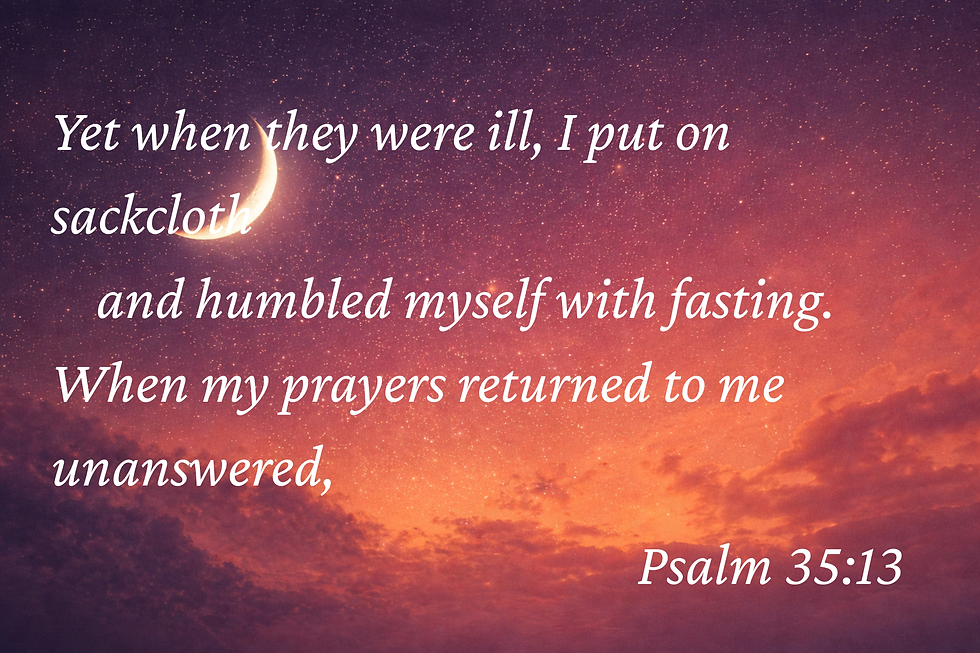
Isaiah 58 reveals that true fasting humbles the heart, loosens spiritual chains, and realigns us with God’s purposes. Acts 13 shows us that guidance came during fasting—not after it. Psalm 35 reminds us that fasting humbles the soul before God.
Fasting strengthens us for spiritual warfare.
It quiets the noise of the flesh.
It exposes our dependence.
It disciplines our desires.
When Daniel fasted, his answer came—not as a feeling, but as divine intervention. God responded because Daniel was willing to sacrifice comfort in order to seek truth.
Fasting teaches us something vital:
our bodies do not control us.
Our appetites do not lead.
Our flesh does not dictate obedience.
When we learn to say no to ourselves, we learn to say yes to God.
That is why fasting matters.
Not if—but when.
Fasting recalibrates the soul before it ever reshapes the body.
While fasting is never about the body first, Scripture reminds us that obedience often brings layered blessings. When we deny the flesh, the body often responds with clarity, restraint, and renewal. Hunger sharpens awareness. Simplicity resets excess. Many experience improved focus, discipline, and physical restoration—not because the body is the goal, but because God designed it to respond when we live in alignment with His order. Health may be a byproduct, but holiness is the aim.
Reflection Questions
What comforts or habits might God be inviting you to lay down so you can seek Him more fully?
When was the last time you intentionally fasted—not for health, but for spiritual clarity and closeness to God?
How might fasting reshape your dependence on God rather than on comfort?
Closing Prayer
Lord God,
Teach me to desire You more than comfort.
Give me the courage to surrender what distracts me so I may hear Your voice clearly.
Humble my heart, strengthen my spirit, and discipline my flesh.
I choose obedience over ease and surrender over control.
Lead me, guide me, and draw me closer to You through fasting and prayer.
In the name of Jesus Christ
Amen.


Comments